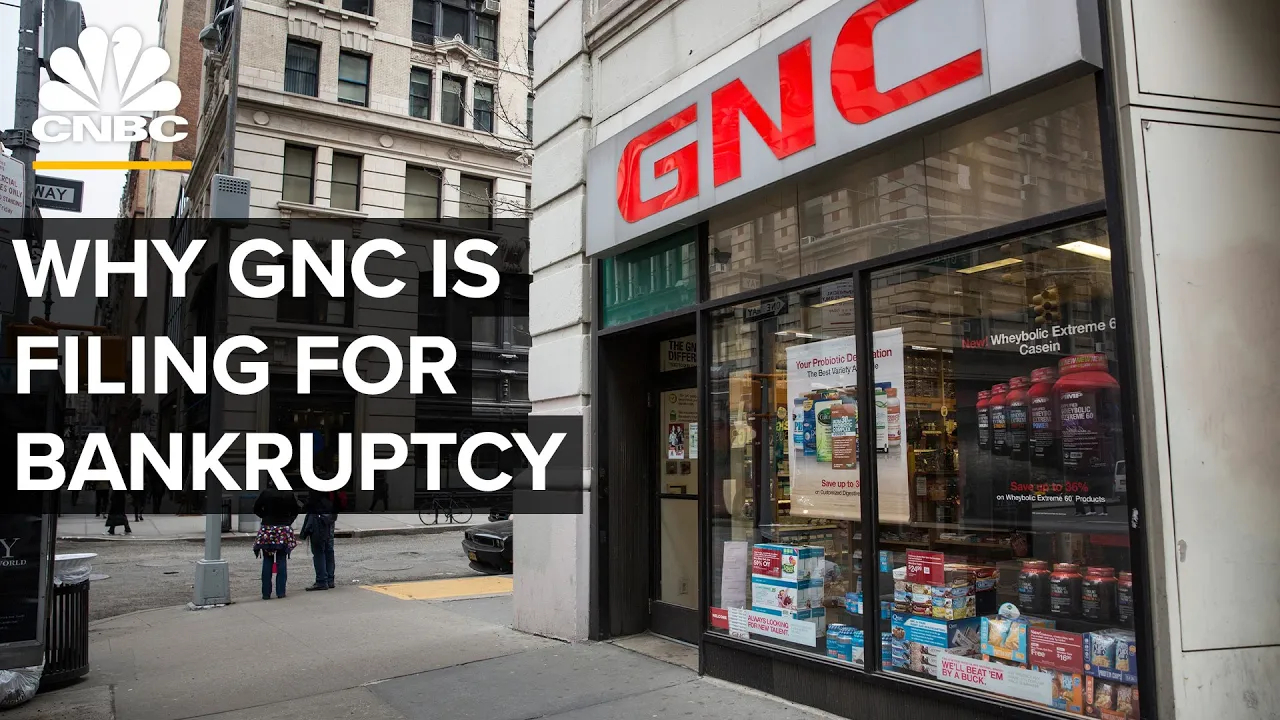
For decades, GNC has been the one stop shop for vitamins, muscle building, protein powder packs, and practically every variety of weight loss product. From New England to Southern California, chances are if you ever needed a potassium boost, there was a GNC at a mall nearby. But the company that urged Americans to live well has fallen on tough times. In June 2020, GNC filed for bankruptcy with plans to close about a thousand locations more than 10% of its global footprint. After years of falling sales and mounting debt, the company saw a steep drop in revenue after the coronavirus pandemic forced thousands of its locations to temporarily close.
But anxiety around Covid-19 has actually pushed health and wellness concerns to the top of most people’s agenda. And that has caused sales of immunity dietary supplements like vitamin C to skyrocket. Health and wellness has become the number one priority for consumers during Covid-19, and supplements are a very key ingredient to a healthy lifestyle. Nutrition Business Journal, the trade publication for the industry, predicts dietary supplements sales will increase more than 12% in 2020, the highest growth rate for the industry since 1997. And this is a pretty transformational moment for people’s consideration of health.
There was a long time as supplements were about keeping yourself healthy for when you get old. Now, health and your nutrition is a you know, it’s a suddenly a right now, right in this moment proposition. According to the Council for Responsible Nutrition, 77% of U.S. adults take dietary supplements.
So after 85 years in business, why wasn’t GNC able to capitalize on the latest dietary supplement boom? And what factors led to the company’s bankruptcy filing? In 1935, David Shakarian, whose Armenian father was said to have helped introduce yogurt to the U.S., opened his first health food store in Pittsburgh, Pennsylvania. The shop was called Lackzoom. The forerunner to GNC, sold honey, yogurt, grains, and healthy sandwiches. And on its first day, sales reached $35, a big number for a business that was starting up at the tail end of the Great Depression. On the heels of that success, Shakarian opened up a second shop. But the business faced a near disaster in 1936, when both stores were wiped out in a flood. Shakarian rebuilt and started a mail order business.
By the early 1940s, he had half a dozen locations around Pittsburgh, and in the 1950s expanded further by placing stores inside shopping malls. The most interesting thing about the nutrition business is it’s kind of been around forever, but it’s always changing. There’s always a new tool kit. There’s always new technologies coming along with additional proof that you find out something’s healthy and find out exactly what it does. In the 1960s, the brand took the name General Nutrition Centers and increased its customer base as the physical fitness movement and healthier eating habits took hold across the US. And by the 1970s, sales of vitamins and other supplements had risen to 50% of the company’s revenue.
In the 70s, the hippie movement really, really fit nicely into the natural foods health foods, healthy. Your diet makes a difference in your health. GNC went public on the New York Stock Exchange in 1980 at $15 a share and soon grew to more than a thousand locations. GNC’s differentiation was an educated salesperson in the store.
And so if you were serious about your health or your fitness, you would go into a GNC and you knew you were talking to a knowledgeable salesperson who could guide you in the right direction. But GNC’s profitability took a hit starting in the 1980s. The chain was seeing increased competition from supermarkets and drugstores that were offering customers healthier food options. Thomas H. Lee Partners took the company private in 1989, but just after a couple of years, decided to take the company public again in the early 1990s.
By then, the company had about 1,500 stores, and like its competitors, it was supplying vitamins and herbs to an aging population. As the vitamin and dietary supplement market intensified over the next two decades, GNC was sold to a string of buyers. Dutch baby food maker Numico bought the company for $2.5 dollars in 1999 and then sold the company a few years later due to slow sales and high debt. In December 2003, investment company Apollo Management bought GNC for $750 million, and in 2007, Ares Management and the Ontario Teachers’ Pension Plan acquired the company for $1.6 billion. To solidify its place in the market, GNC moved its muscle building products to the back and shifted its advertising to focus on women. It also grew proprietary brands like Mega Men and Ultra Mega, which makes more money than selling products that the company doesn’t produce. By 2011, more than half the items sold in stores were only produced by GNC. Another thing GNC did was make products for third party vendors like Sam’s Club, Drugstore.com, and Rite Aid. And to compete online.
It purchased lucky vitamin dotcom for $21 million. By 2011, GNC was public again. The company was the top performing IPO of 2011, gaining 83% from its filing price of $16 on April 1st. By November 2013, GNC had a peak market share, a $5.8 billion, 240% higher than 2011.
But the gains were short lived as the company faced increased competition from online rivals, shrinking margins, and a customer base that was moving towards organic foods. By the end of 2019, GNC stock price was less than $3 a share, and the company had a market cap below $250 million. In December 2019, GNC had over 7,500 locations. 38% of stores were company owned and in the U.S.
or Canada, 13% of stores were franchises in the U.S. and Canada. 25% were stores overseas and 23% were store within a store locations in Rite Aids. The vitamins and dietary supplement industry in the U.S. is an almost $50 billion market, according to the Nutrition Business Journal. Brick and mortar retailers like GNC, The Vitamin Shoppe, and Vitamin World have faced an onslaught of competition from big box retailers like WalMart and Target, grocery stores like Kroger, and Whole Foods, and e-commerce giants like Amazon.
I think if you go to a beach and you look at the number of grains of sand, there are probably a similar number of people that are selling natural products. And that’s a big overall risk when you buy things from the Internet because the quality is all over the place when you buy things online. The Vitamin Shoppe got its start in 1977 and went public in October 2009 at $17 a share by May 2012. Shares had more than tripled, but after stocks reached a peak closing price of $64 in February 2013, much like GNC shares began to slide.
It’s a similar story for rival brick and mortar retailer Vitamin World, which has been around since 1976. The company filed for bankruptcy in September 2017 after facing above market rents and underperforming stores. But the downturn may have hit GNC the hardest. By December 2019, GNC same store sales were down for three out of the previous four years, and the company was facing competition from every angle. With almost a billion dollars in debt and falling sales due to the coronavirus pandemic, the company filed for bankruptcy in June 2020. So what went wrong for GNC? According to analysts, the company’s heavy focus on in-store sales specifically targeting a young male demographic wasn’t the right move. In 2019, 41% of GNC’s U.S.
company owned products sales came from sports nutrition products like protein and performance supplements, 25% came from health, beauty and wellness products, and 17% came from vitamins and herbs. While it does have an online marketplace, today a broader consumer base is shopping for health and wellness products online and at big box stores. And while GNC might have failed to fully embrace the move from sports nutrition to health and wellness prior to covid-19, it is trying to capitalize on the country’s newfound health craze now. In a video on the company’s website, GNC’s Vice President of Global Research, Development and Innovation discussed coronavirus, its symptoms and ways to boost your immune system with products like vitamin C, zinc, probiotics, and protein. The company added that the supplements could not prevent or treat covid-19.
None of these supplements will prevent or treat Covid-19. In a statement provided to CNBC, the company said GNC’s Chapter 11 filing in North America has allowed us to accelerate our business strategy and preserve business continuity for the benefit of our employees, customers, and partners. In September 2020, the company announced that after no other offers had been submitted during the bankruptcy auction, it was proceeding with a sale to China’s Harbin Pharmaceutical Group for more than 750 million dollars. Senator Marco Rubio has called for a national security review to assess the deal, saying that GNC keeps health data on millions of Americans that could be turned over to the Chinese government. In an email to CNBC, GNC said that its consumer data is safeguarded by rigorous standards and not accessible to any foreign nationals or governments. Furthermore, Harbin’s stake in GNC was reviewed by the Committee on Foreign Investment in the U.S.
in 2018. In the U.S., dietary supplements are not regulated like drugs and do not need to be tested for efficacy or safety before they are sold online or in stores. According to federal health officials, between 2004 and 2013 tens of thousands of Americans ended up in the emergency room due to adverse effects related to dietary supplements. Many of those visits involve cardiovascular issues related to weight loss products or energy supplements among young adults and swallowing problems among older adults.
If I was going to categorize the dietary supplement market, I would categorize it as the Wild West of medicine. The 1994 Dietary Supplement Act made manufacturers and distributors of dietary supplements responsible for the safety and labeling of their products. The statute also said the FDA is responsible for taking action against a misbranded or contaminated supplement after it has reached the market. We were extremely influential in getting the 1994 Dietary Supplement Health Education Act passed. That’s the law that currently still governs. It was an industry wide effort, but we paid for like 80 %of it so we had an outsized voice in that passage and the strategy behind it.
And that really set the framework for competition to come in. We thought it would get rid of this idea that, you know, it’s an unregulated industry because it’s very regulated industry. And it did it did go a long way towards that. After the law passed, the number of dietary supplements in the U.S.
skyrocketed from about 4,000 in 1994 to more than 90,000 in 2014. The reality is that since nobody knew what was in the product or what wasn’t in the product and the main thing that people were looking at was whether or not it contained on the label what it was that they wanted and the price point of that product that people were buying substandard products for years. And there was actually a tremendous amount of fraud and abuse in the system and in a number of areas that fraud and abuse is still continuing. Even some of GNC’s practices have faced scrutiny. In 2015, GNC reached an agreement with the New York state attorney general’s office to use DNA barcoding to authenticate the plants used in supplements. The move came after a study commissioned by the attorney general failed to detect genetic material for the plants depicted on the labels in most of the retailer’s herbal supplement products. The following year, GNC agreed to pay a $2 million settlement as part of a federal crackdown on supplements containing hidden or unsafe ingredients.
GNC did not admit to any wrongdoing, but agreed to do a better job policing its products. In a statement provided to CNBC, the company said GNC is open for business and is committed to helping our customers live well. Today people want health products they can trust, which makes GNC’s science based products more relevant now than ever before. So with tens of thousands of products available in the market, can dietary supplements actually improve your health? According to one expert, not necessarily.
They’ve looked specifically at the value of taking vitamins and minerals, and for the average American, there’s no value in them taking them because they’re getting those nutrients through other sources. But it doesn’t mean that there’s not individuals in the country who specifically benefit from vitamins and minerals. There are a number of cases where vitamins and minerals supplements are beneficial. According to one expert, the best therapy for slowing macular degeneration is a cocktail of different vitamins and minerals. People who have osteoporosis need high amounts of calcium and vitamin D, and people losing weight can also benefit from supplements. But whether they help build your immune system or not, analysts think that a fear of Covid-19 and a new interest in dietary supplements could mean massive growth for the industry in 2020.
Nature’s Way Sambucus Black Elderberry Gummies with Vitamin C and Zinc, 60 Gummies

Source: CNBC
Comments
Post a Comment